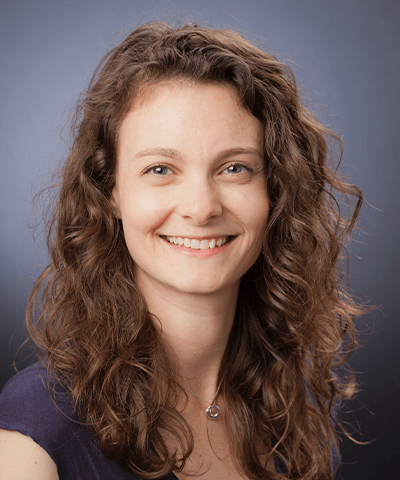
Ruth Franklin, Assistant Professor of Stem Cell and Regenerative Biology, has received one of 10 Blavatnik Institute Early Career Investigator Awards from Harvard Medical School. Totaling $5 million, these grants are designed to fuel high-potential research conducted by some of the most exceptional junior faculty members — those within the first decade of their careers as principal investigators — on the HMS Quadrangle.
The awards were made possible by ongoing support from the Blavatnik Family Foundation that aims to spur scientific advancement and transform those discoveries into new therapies and new tools to diagnose, prevent, and treat disease.
“Thanks to the generosity of Len Blavatnik and the Blavatnik Family Foundation, we are enabling extraordinarily promising science at the most vulnerable stage in young investigators’ careers,” said HMS Dean George Q. Daley.
The competitive funds were awarded to fewer than 1 in 3 applicants, Daley reported. Proposals were reviewed by a committee of senior faculty members from multiple departments in the Blavatnik Institute at HMS.
Each awardee will receive up to $500,000 across two years.
During that time, Franklin will explore how the immune system — particularly macrophages — can repair lung damage after infection. The work builds on her lab’s recent discovery that a macrophage-derived factor promotes regeneration of the epithelial lining of the lung. Franklin’s findings could aid creation of regenerative strategies to enhance lung function after injury and prevent the development of diseases such as fibrosis and cancer.
“This support allows us to take bold steps toward understanding lung regeneration at a critical time when research funding is increasingly uncertain,” said Franklin. “I’m hopeful that our progress will ultimately lead to new therapies to improve the lives of patients with lung disease.”
Adapted from the Harvard Medical School. Read the full release here.