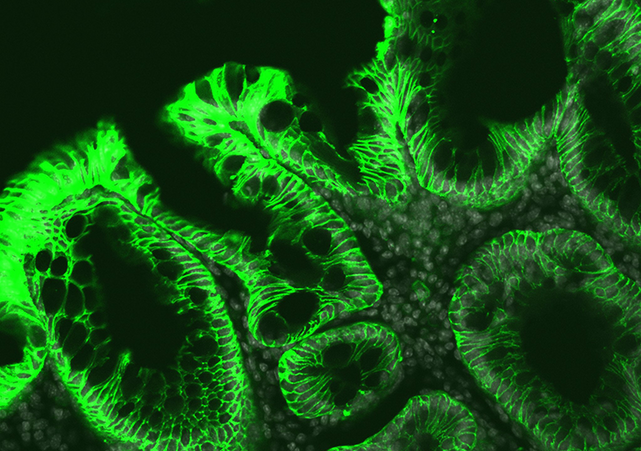
Chronic inflammation can raise a person’s risk of cancer, and a new study reveals key details about how that might happen in the gut and points to better ways to identify and reduce risk.
Scientists at the Broad Institute and Harvard’s Department of Stem Cell and Regenerative Biology have revealed in mice that after colitis, or chronic intestinal inflammation, seemingly healed gut tissues may retain the memory of earlier inflammation through molecular “scars” that make it easier for cancer to take hold later on. These memories are encoded as changes in the epigenome that are handed down from cell to cell through many generations of cell division, with long-lasting effects on gene activity that can later drive tumor growth.
Appearing in Nature, the work suggests a two-hit process over time in which alterations in the genome — an epigenetic change and a cancer mutation — can accelerate tumor growth. It also points to ways to potentially identify and possibly intervene on these cancer-promoting factors with new biomarkers and therapeutics.
“This finding is a great example of how our experiences and exposures affect our future health,” said study senior author Jason Buenrostro, a Broad core member, professor at Harvard University in the Department of Stem Cell and Regenerative Biology, leader of the Biology of Adversity Project at the Broad, and a co-investigator on the Cancer Grand Challenges team PROSPECT. “We’ve shown that epigenetic changes are the missing piece in how inflammation leads to cancer.”
This article is adapted from a Broad Institute story by Leah Eisenstadt.