The human brain has long posed unique challenges for researchers. The very organ that most differentiates humans from the rest of the animal kingdom is arguably the hardest to study. For one thing, it develops over many years, expanding rapidly in utero and in early childhood, but continuing to grow through adolescence and rewiring into early adulthood.
Brain biopsies risk neurological damage to the patient, and unlike some organs, the brain doesn’t regenerate — meaning that a removed section would not replenish for the donor, but also that researchers couldn’t grow more brain tissue in the lab from a small sample. On top of that, there is no “single human brain,” as Paola Arlotta, Golub Family Professor of Stem Cell and Regenerative Biology (SCRB) explained, because of genetic and developmental differences and divergences across each person.
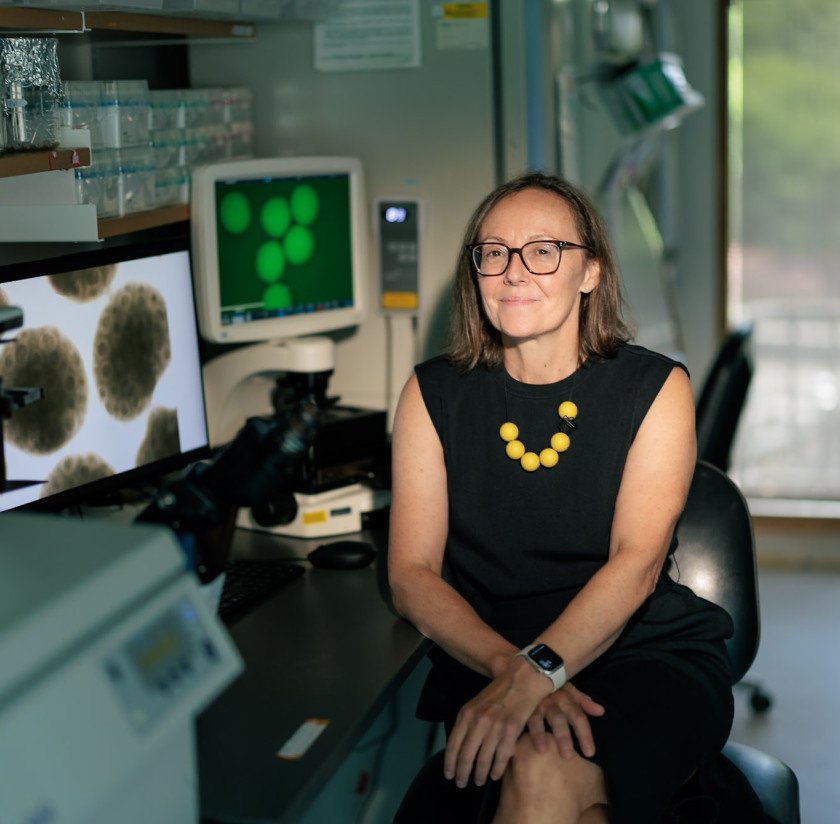
But cutting-edge technologies — including artificial intelligence and the study of brain-mimicking “organoids” that Arlotta has pioneered, growing stem cells in a lab into clusters of cerebral cortex cells with firing neurons — are giving scientists new tools for understanding the brain.
Now, a $46 million grant from a new autism research initiative, Aligning Research to Impact Autism (ARIA), will turbocharge that mission at Harvard and Yale, scaling up the efforts of individual labs like Arlotta’s while aligning their work, with a focus on two shared goals: understanding and mapping how the human brain develops — at the neural, cellular, genetic, and molecular levels — to understand the divergences that occur in the developing brains of children with autism.
“This is really a dream-come-true opportunity and collaboration, because of the scale of the investment, and therefore the scale of the science that we will be able to do, and because it brings together experts from a variety of different fields who normally wouldn’t necessarily work together,” said Arlotta, who is also an associate member of the Broad Institute of Harvard and MIT. “We have always studied things one experiment at a time, while here we’re aiming for the full picture.”